


By Erin Judge, managing editor, PostPress
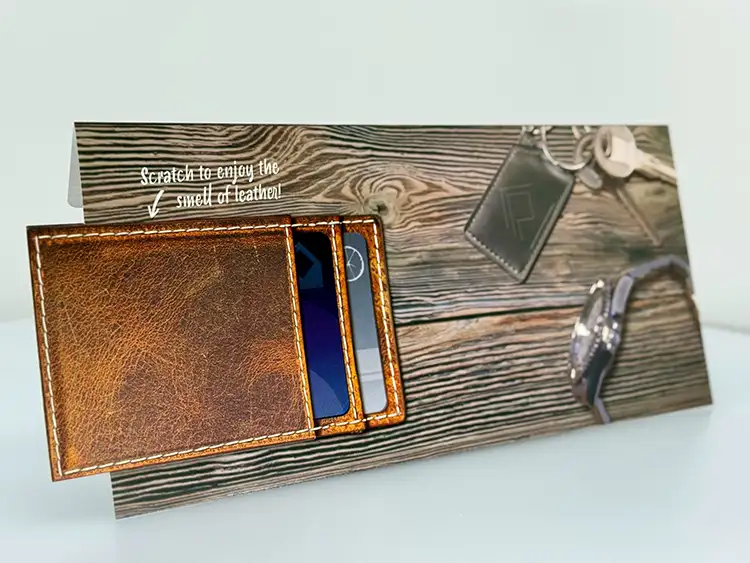
Sabine Lenz, founder of PaperSpecs.com and an accomplished designer in her own right, has built an impressive social media following and established herself as a leading “print-loving” designer influencer. Passionate about educating designers on print and finishing, Sabine spoke with PostPress to share her perspective on where print design is headed in 2026 and how specialty finishing and effects are poised to make a significant impact.
What print design trends are rising in popularity?
In 2026, print is being used more selectively and with much clearer intent. Rather than printing more, brands are focusing on fewer pieces that are designed to have greater impact. As a result, a few key print design trends are gaining momentum.
One of the most visible trends is targeted luxe. Print is increasingly reserved for moments that matter – specific audiences, key touchpoints and high-value communications. These pieces are designed to feel considered and intentional, with an emphasis on quality over quantity.
At the same time, catalogs and publication-style pieces are experiencing a resurgence. Instead of high-volume sales tools, these are more curated formats that invite people to slow down and spend time with the content. They’re designed to be kept, revisited and experienced – positioning print as something more lasting and immersive.
Another trend shaping print in 2026 is what I call “short-run everything.” Short-runs are no longer treated as a compromise. Brands expect the same level of thought, design and production quality whether a piece is printed in thousands or tens. This makes print better aligned with targeted, intentional use.
How do these trends incorporate embellishments such as spot/specialty coatings, foils, embossing, etc.?
Embellishments play a central role in how these trends show up, especially as print becomes more intentional and more experience driven.
Foil is a key component, largely because the wider availability of digital foiling has made it far easier to access and incorporate into design. Designers are no longer treating foil as a rare or hard-to-produce option. Instead, it’s being designed in from the start – used to highlight specific elements, add contrast or introduce subtle emphasis without overwhelming the piece.
Specialty and spot coatings are also used deliberately, particularly to enhance the tactile experience. These coatings go beyond visual effect and add a physical dimension that invites interaction. They reinforce what print does best: Creating a sensory experience that digital communications simply can’t replicate.
Are new substrates, inks or finishing techniques influencing design decisions?
As designers become more aware of the availability of specialty inks and toners, they’re actively embracing them in their work. Metallic and neon toners – whether it’s a pop of neon pink or yellow or a metallic layer used as an underlay – are being incorporated more intentionally into designs. The accessibility of these inks, especially for short runs, is encouraging designers to experiment with color and layering in ways that feel both fresh and achievable.
Are there certain trends popping up within particular segments – folding carton, label, direct mail, publications, etc.?
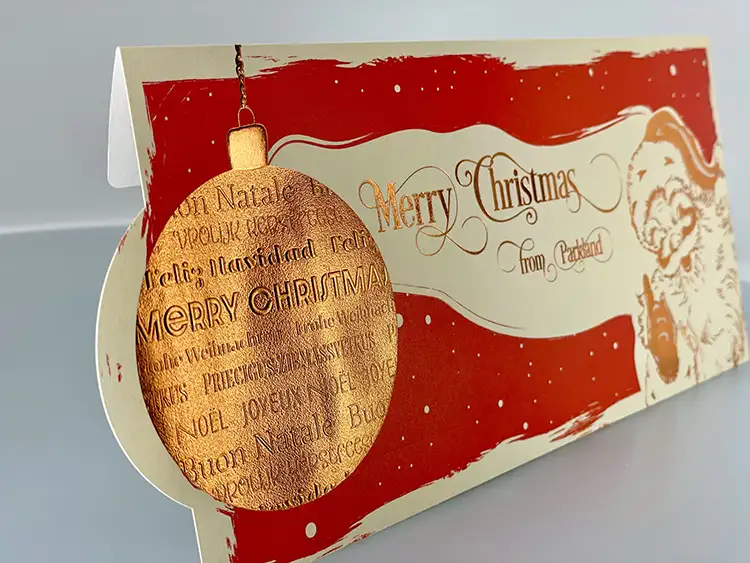
One place where this shows up very clearly is direct mail. A format gaining traction is the trailing-edge diecut envelope (TED-C). Thanks to its slightly edgy shape (pun intended), the envelope itself becomes part of the experience. It creates intrigue and sets expectations before the recipient even opens it. Given that one of the biggest challenges in direct mail is simply getting the envelope opened, this added level of visual interest has proven to make a meaningful difference.
How are evolving consumer expectations shaping print design?
Two factors are shaping print design in very real ways: Sustainability and digital fatigue.
Consumers increasingly expect brands to act responsibly, and that expectation is influencing print decisions long before design or production begins. Sustainability is no longer something brands highlight, it’s something they plan for quietly. This shows up in fewer, more intentional print pieces, shorter runs and a stronger focus on materials that feel well-thought-out rather than excessive.
At the same time, digital fatigue is changing how people engage with physical pieces. With so much of daily life happening on screens, print is being used more deliberately to create moments that feel calm, grounded and human. Well-crafted print stands out because it doesn’t scroll, ping or disappear; it invites attention rather than demanding it.
How are advancements in print technology – automation, digital embellishment and AI – changing the way designers approach print?
With digital embellishments – like foil and raised coatings – becoming more widely available, designers are no longer treating these finishes as “special occasion only.” They’re using them more confidently and more often, because today’s production reality supports that.
Automation on the production side reinforces this shift by making short, highly finished runs more viable overall. Faster set-up and more flexible workflows allow designers to think less in terms of minimums and more in terms of intent.
AI is showing up less as a print consideration and more as a creative starting point. Designers are using it to explore ideas, layouts or directions early on, then applying those concepts to print in more thoughtful ways. In that sense, AI acts as a jumping-off point rather than something that directly changes how print is produced.
What cost-effective design elements can designers incorporate that still deliver a lasting impact?
Cost-effective design elements can start with something as simple as paper choice. A stock with a nice tooth or an embossed pattern already brings character and tactility without adding extra production steps. Beyond that, digital embellishments play an important role – making it much easier and more cost-effective for designers to incorporate finishes like foil or raised effects in thoughtful, targeted ways.
How can designers balance sustainability with the desire for premium finishes or embellishments?
This is less about trade-offs and more about education. Many embellishment techniques – both traditional and digital – are already embracing responsible print production. The challenge is that designers don’t always have accurate information. When questions about sustainability come up, they turn to Google or AI for answers. Unfortunately, especially when it comes to print, those sources frequently provide incomplete or incorrect information.
That’s why education and trusted, industry-backed sources are so important. Designers (and printers) need reliable information they can confidently share with their clients, particularly when sustainability questions arise around finishes and embellishments.
How are brands using print to create stronger customer experiences in 2026?
One way brands are creating stronger customer experiences in 2026 is by using print to build brand theater, even for very small, carefully selected audiences.
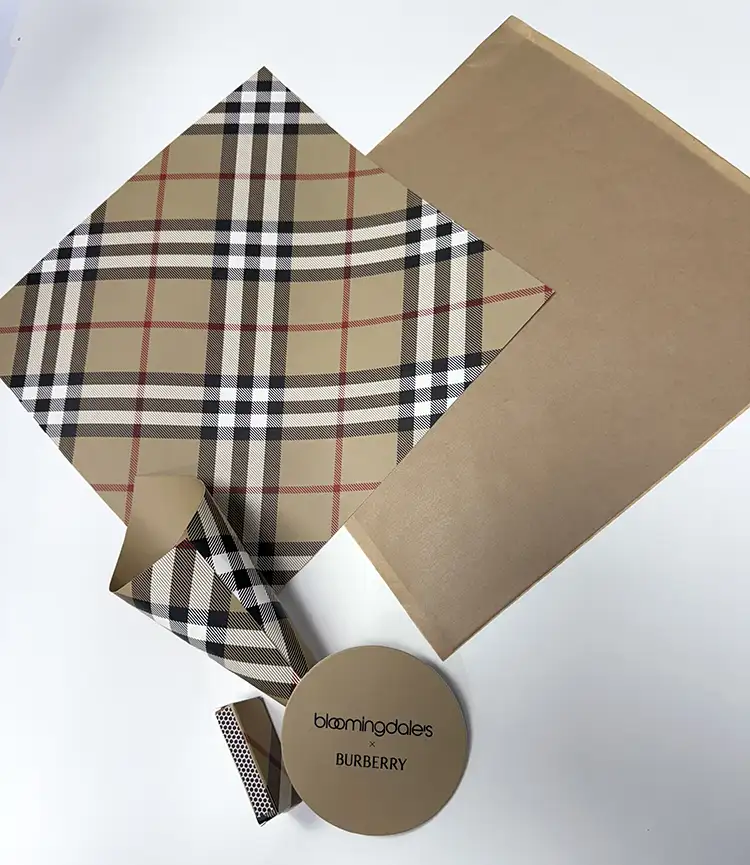
A great example is the Burberry and Bloomingdale’s Christmas window reveal, which included a special launch party. This experience wasn’t designed for the masses. It was created for a very targeted group of customers and influencers and every detail was considered – including coasters, custom matchboxes, fry-cone holders and even burger wraps. Print played a role in setting the tone, supporting the story and extending the experience beyond the physical space.
This is where short-run print really shines. Brands no longer need scale to justify creating something special. Even limited quantities can feel immersive and intentional when print is used thoughtfully as part of a larger experience. In those moments, print isn’t just communication, it becomes part of the story itself.
For more information, visit www.paperspecs.com.