


By Jeff Peterson, executive director, FSEA
The folding carton industry, like others, has experienced significant changes and opportunities over the last several years – with more changes predicted for the future. PostPress sat down with Emily Leonczyk, president of the Paperboard Packaging Council (PPC) to discuss the current folding carton industry and her thoughts on the future.
Q: What changes have you seen in the last few years as they relate to the production and manufacturing of folding cartons? What factors have contributed to these changes?
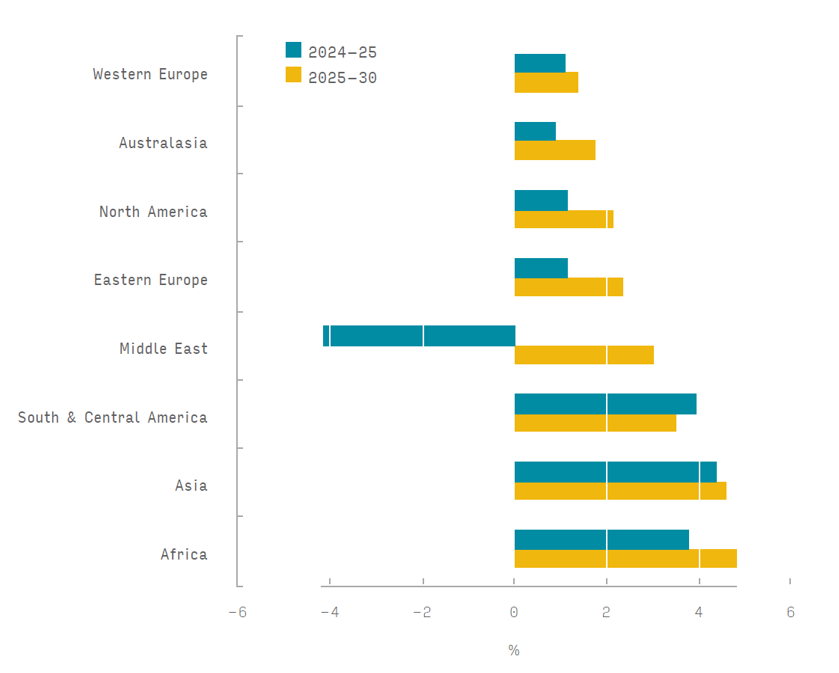
SOURCE: Smithers, “The Future of Folding Cartons to 2030,” June 2025.
Over the last several years, folding carton production has become more advanced, automated and deeply integrated as manufacturers respond to evolving regulations, rising customer expectations and the need for greater operational resilience.
I see these shifts firsthand through visits to member plants across the country. Many converters are rethinking their entire production flow, replacing three or four legacy machines with one or two highly integrated systems. Investments are increasingly centered on simplifying processes, reducing handoffs and automating repetitive tasks to drive efficiency, consistency and throughput. Integrated prepress and postpress workflows, real-time data and smart automation are helping teams reduce downtime, improve on-the-floor decision-making and produce more – sometimes with smaller teams.
These changes are being driven by both necessity and opportunity. Labor challenges have accelerated automation, but customer expectations around speed-to-market and flexibility are pushing manufacturers to rethink how work moves through their operations. At the same time, cost pressures, sustainability requirements and the demand for strong visual impact continue to raise the bar. Today’s folding carton manufacturers are being asked to operate more efficiently while still delivering innovation, quality and adaptability across every stage of production.
Q: The packaging and folding carton industry has remained strong. What has contributed to the continued growth in the marketplace?
The folding carton industry has remained resilient because it continues to serve essential and growing end-use markets with reliability, flexibility and value. According to our RISI Fastmarkets Industry Trends Report, which is exclusively prepared for PPC members, seven key end-use markets for folding cartons are projected to grow by more than 1% annually through 2029. These include pharmaceuticals, soap and detergents, cosmetics and toiletries, retail and carry-out food. Each of these categories depends on packaging that performs consistently, protects product integrity and meets evolving consumer and regulatory expectations.
Retail strength remains an important part of this story. While there were concerns that e-commerce would significantly erode retail demand, that shift has not materialized at the pace once expected. Retail packaging continues to play a critical role, and folding cartons are well-positioned to support both in-store and omnichannel environments.
Equally important to the industry’s continued growth is its culture of collaboration. Through PPC, members regularly open their doors to one another by hosting plant tours, sharing best practices and learning across companies. I have seen this not only across North America but also globally through our engagement with organizations such as the European Carton Makers Association (ECMA). These pro-competitive conversations around innovation and industry trends help members anticipate change rather than simply react to it.
This collaborative culture – paired with the inherent strengths of paperboard as a renewable, recyclable and highly adaptable material – has helped the folding carton industry remain resilient and continue to grow even in periods of uncertainty.
Q: Has the continued focus on sustainability?
Yes, sustainability has had a positive impact on folding carton production. I think paperboard has one of the most compelling sustainability stories in packaging: Made from renewable wood fiber, sourced from responsibly managed forests and recyclable. Its fibers can be recycled multiple times, and forests are continuously replenished through responsible harvesting and replanting. This directly aligns with the sustainability goals many brands are actively working toward.
In the context of Extended Producer Responsibility (EPR), fiber-based packaging stands out for being designed, from the start, with circularity in mind. That distinction matters as brands and regulators take a closer look at material choices and end-of-life outcomes.
What I find most interesting is how sustainability shows up on the plant floor. Across PPC member operations, it is less about checking a box and more about designing smarter, more efficient solutions. Teams are focused on delivering performance, improving efficiency and managing costs – with sustainability woven into design decisions, production processes and customer conversations rather than treated as a separate initiative.
Q: From your point of view, have special effects and embellishments become a growing sector for PPC members and folding carton production? Why do you believe that is the case?
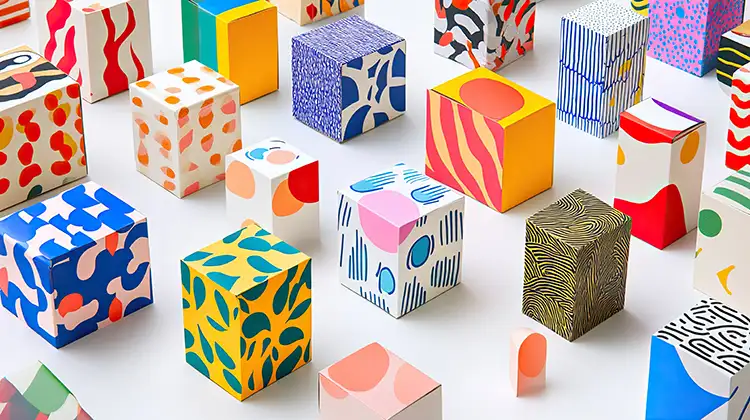
Yes, special effects and embellishments have become a significant area of growth, particularly as brands look to differentiate in increasingly crowded retail environments. Packaging is doing more work at the point-of-purchase, and folding cartons are well-suited to support this through visual and tactile impact.
We’re seeing continued advances in printing, coatings, embossing, foils and barrier technologies, alongside more thoughtful use of substrates and improvements in production efficiency. At the same time, digital capabilities are playing an increasingly important role – enabling personalization, shorter runs and faster turnaround without sacrificing quality. That flexibility is especially valuable as brands test concepts, target specific audiences or quickly respond to market changes.
Folding cartons and rigid boxes allow brands to create a standout shelf presence while remaining aligned with sustainability goals. Even embellishments like hot and cold foils are fully repulpable, making them options when both performance and sustainability matter. As packaging becomes more central to brand identity, these effects are no longer optional. They are a strategic part of how brands communicate quality, storytelling and value.
Q: What are some of the trends in folding carton production that you foresee in the future?
Looking ahead, I expect continued investment in automation, digital integration and workforce development. The converters that will be most successful are those that build flexible, integrated operations with digitally fluent teams that can fully leverage technology. One of the biggest challenges remains people, specifically having the right talent in place to effectively use data and automation.
I am also seeing stronger collaboration across the value chain, with converters working more closely with equipment and technology suppliers and brands engaging earlier in the design process. That collaboration is helping the industry more quickly respond to change.
Cost remains critical; sustainability is rising again amid increased regulatory and consumer pressures; flexibility and speed-to-market are becoming essential as demand fluctuates. This is especially true as brands continue to transition from plastic to paper. Innovations in barriers and coatings will play a key role, but they must deliver performance without compromising recyclability or compostability.
Overall, folding cartons are well-positioned for the future. The industry’s ability to innovate, collaborate and adapt together will remain one of its greatest strengths.
Expanded Options Help Drive Embellishments for Folding Cartons
For many years, hot foil stamping was the only available method for adding metallic or holographic decoration to a folding carton. Today, the choices have expanded exponentially. Brands and folding carton producers can choose from several technologies, including hot foil, cold foil transfer, digital foils and the use of metallic/holographic substrates.
As embellishment technologies continue to evolve, each technique offers unique strengths and weaknesses. Hot foil stamping still offers the most flexibility with paper choices (both coated and uncoated), foil colors and machinery options; however, sheet size and run lengths need to be considered. Cold foil transfer applies metallic decoration in one pass (through a retrofit to an offset or flexo press) and can be overprinted to create a variety of colors. Digital foil is an excellent choice for shorter runs and folding carton prototypes. It also can produce a raised foil effect by using digitally applied inkjet coating as the adhesive. Metallic/holographic substrates are a popular choice for high-volume applications, where the metallic and/or holographic decoration is utilized throughout the design of the package.
There are several considerations for brands and end users to determine the best process; still, the expanded range of options ultimately benefits the entire industry.
A recent study produced by Smithers 1, a global authority on the packaging industry, estimates that the total global consumption of carton board reached 56.3 million tons in 2025, valued at $58.9 billion. This converts into 52.4 million tons of packaging, with a value of $132.8 billion. The market report – “The Future of Folding Cartons to 2030” – shows that demand will push global consumption of folding cartons to 63.1 million tons in 2030, with value increasing to $159.6 billion at constant pricing.
With this growth, FSEA predicts the overall use of embellishments also will grow over the next several years – driven by competition for brand recognition on the store shelf and continued innovation in embellishment technologies.
For a copy of the Foil Cheat Sheet (a collaboration between FSEA and PaperSpecs), visit www.fsea.com and click the Education link to order. The Foil Cheat Sheet is a single go-to source explaining the different techniques available for creating metallic decorating finishes. From hot and cold foil to toner-based and varnish-based digital foiling, the guide describes each technique and provides the advantages and disadvantages of each and embellished samples of each process.
Resource:
- Smithers, “The Future of Folding Cartons to 2030,” June 2025.